Fuel prices in the UK are not getting friendlier. Whether you are filling up a diesel car on the daily commute or running a van for work, the cost per mile has become a real concern for millions of drivers. And somewhere in that conversation, the question of car remapping keeps coming up.
Does a car remap actually improve fuel economy — or is it just something tuning companies say to sell more remaps?
The honest answer is: it depends entirely on the type of remap, the vehicle, and how you drive afterwards. This guide breaks down exactly what a fuel efficiency remap does, when it works, when it does not, and whether it makes sense for your specific situation.
What a car remap actually changes
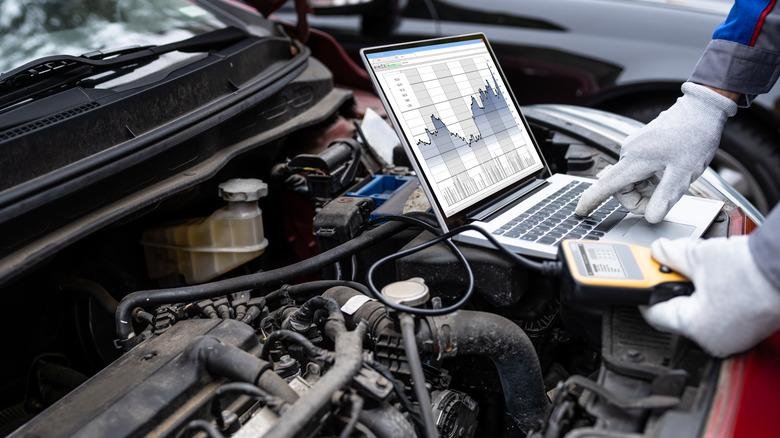
Every modern car and van leaves the factory with an ECU — an Engine Control Unit — that manages how the engine runs. It controls fuel delivery, turbo boost pressure, ignition timing, torque output, and dozens of other variables that determine how the engine performs.
Manufacturers programme these ECUs conservatively. Not because the engine cannot do more — but because they need one map to work across multiple markets, fuel grades, temperature ranges, and driver types. That broad safety margin is sensible for mass production. However, it often means the engine is working harder than it needs to in order to deliver the same road speed.
A car remap rewrites that factory calibration. Instead of a one-size-fits-all setting designed for every possible scenario, the ECU gets a revised map optimised for how your specific engine actually performs. The result depends on whether the remap is tuned for performance, for economy, or for a blend of both.
Performance remap vs fuel efficiency remap — what is the difference?
This is where most drivers get confused — and where the answer to the fuel economy question begins.
Stage 1 performance remap
A Stage 1 car remap prioritises power and torque. The ECU is recalibrated to deliver more boost, sharper throttle response, and stronger acceleration across the rev range. Power gains on a typical diesel are significant — and the drive feels noticeably more responsive.
Fuel economy can improve on longer motorway runs after a Stage 1 remap, because the extra torque means the engine works less hard to maintain cruising speed. However, if you use the additional power — and most drivers do — fuel consumption stays similar to stock or increases. A Stage 1 remap delivers what it promises. It just delivers it as performance, not necessarily as MPG.
Fuel efficiency remap
A fuel efficiency remap, sometimes called an eco remap or economy remap, takes a different approach entirely. Rather than maximising peak power, it recalibrates how the engine delivers torque across the lower and mid rev range — making the engine more responsive at the speeds and RPM ranges most UK drivers actually use every day.
The result is an engine that reaches a comfortable cruising torque earlier, allows the driver to shift up sooner and stay in a higher gear longer, and works less hard to maintain everyday road speeds. Less engine effort at the same road speed means less fuel burned per mile. That is where the MPG improvement comes from — not from magic, but from genuine efficiency gains in how the engine operates.
What kind of fuel economy improvement is realistic?
This is the question that deserves an honest answer rather than a headline figure.
For a diesel van doing long motorway mileage, a well-executed fuel efficiency remap delivers meaningful and consistent MPG improvement. The combination of earlier torque delivery and reduced engine effort at cruising speeds is where economy remapping performs best.
For a diesel car used primarily for urban driving and short journeys, the gains are more modest. City driving involves constant acceleration, braking, and low-speed operation — conditions where the fundamental efficiency gains of a remap have less opportunity to make a difference.
For petrol vehicles without a turbocharger, the honest answer is that a fuel efficiency remap is unlikely to produce economy gains significant enough to justify the cost. Economy remapping works best on turbocharged diesels — the engine type where torque delivery and boost management have the most direct impact on how efficiently the car cruises.
The drivers who see the strongest results are those doing regular A-road and motorway mileage in turbocharged diesel cars and vans — particularly fleet operators and tradespeople covering consistent weekly mileage.
Why diesel vans benefit most from car tuning for economy
If there is one vehicle type where a fuel efficiency remap makes clear financial sense, it is the diesel van used for regular work mileage.
A van doing 20,000 miles a year at 32 mpg spends significantly more at the pumps than one doing the same miles at 38 mpg. Across a fleet of vans, that difference scales into a substantial annual saving. The remap cost is a one-time investment. The fuel saving is ongoing, every single mile, for the life of the vehicle.
Beyond straight MPG figures, economy-focused car tuning also produces a van that is more relaxed to drive on longer runs. Earlier torque means less need to drop gears on inclines, less gear-hunting on dual carriageways, and a more comfortable driving experience for anyone spending long hours behind the wheel. For fleet operators managing driver fatigue and vehicle wear, these are practical benefits that go beyond the fuel bill.
The honest limitations — when a remap does not improve economy
Any guide on this subject that does not address the limitations is selling rather than informing. Here is what does not work:
A performance remap used aggressively does not improve economy. The gains are real, but they go into acceleration rather than efficiency. If you remap for power and drive accordingly, expect similar or slightly higher fuel consumption than stock.
A fuel efficiency remap on a vehicle with existing faults does not perform as intended. Worn injectors, a struggling turbo, boost leaks, or a tired EGR valve all prevent the engine from responding to the revised map properly. Fix the mechanical issues first — then remap. Remapping a car in poor condition produces poor results regardless of how well the map is written.
A remap does not overcome driving style. The biggest single variable in fuel economy is not the ECU map — it is how the driver uses the throttle. A remap gives the engine a more efficient operating window. How much of that window the driver exploits determines the real-world result.
What a professional car tuning service actually involves
Understanding the process helps set realistic expectations — and explains why the quality of the remap matters as much as the type.
Vehicle assessment first
Before any map is written or applied, a professional car tuning technician checks the vehicle's condition. Boost pressure, sensor readings, injector performance, and any stored fault codes all get assessed. A remap applied to a vehicle with underlying issues produces compromised results. The assessment is not optional — it is what separates professional car tuning from a generic file-and-go operation.
Custom calibration vs generic maps
There is a significant difference between a custom-calibrated remap written for your specific vehicle and a generic map downloaded from a library and applied without adjustment. A generic map may improve things. A custom calibration — written with live data from your actual vehicle — optimises the ECU for how your specific engine performs rather than how an average example of that engine type performs. For economy remapping especially, this distinction matters.
Dyno testing
A reputable car tuning service tests the results on a dynamometer — a rolling road that measures real power and torque output before and after the remap. Dyno-tested results are proof. A claimed MPG improvement without supporting data is not.
Road test and driver handover
After the remap and dyno test, the vehicle gets a road test to confirm real-world behaviour matches the data. A professional technician will also explain how to drive after the remap to maximise the economy gains — because the map creates the opportunity and the driver determines the outcome.
Car remap and car tuning — is it legal in the UK?
Yes. ECU remapping is completely legal in the UK provided the vehicle retains all of its standard emissions equipment — including the DPF and catalytic converter — and the modification is declared to the vehicle's insurer.
Remapping that removes or bypasses emissions-related components is a separate matter and illegal for road use. A fuel efficiency remap from a reputable car tuning specialist does not touch emissions equipment. It works within the engine's existing systems to optimise how they operate — not to circumvent them.
Declaring the modification to your insurer is straightforward and in most cases has minimal impact on premiums for an economy-focused remap. Failing to declare it is the risk — not the remap itself.
Frequently asked questions
Does a car remap improve fuel economy on a diesel?
For turbocharged diesel vehicles, particularly those doing regular A-road and motorway mileage, a fuel efficiency remap produces genuine MPG improvement by delivering torque earlier and reducing how hard the engine works at cruising speeds. Results are strongest on diesel vans and cars used for consistent higher-speed driving.
Will a car remap void my warranty?
How long does a car remap take?
Does car tuning work on petrol cars?
Do I need to tell my insurer about a remap?
Call to Action
f rising fuel costs are affecting what your car or van costs to run, a fuel efficiency remap could be the most cost-effective single improvement you make. Based in Walsall and serving drivers across Birmingham and the West Midlands, Car Tuning Service delivers dyno-tested remaps with results you can measure.