Does an ECU Remap Affect Your Insurance and MOT?
The honest answer — what insurers actually expect you to declare, and what an MOT tester is legally allowed to check.
Ask any UK driver considering a remap what actually stops them, and it's rarely the cost of the tune itself. It's two questions that come up again and again: will this affect my insurance, and will it fail my MOT. Both are fair questions, and both deserve a straight answer rather than the vague reassurance you'll find on a lot of tuning company websites.
This guide covers exactly what UK insurers expect you to declare, what actually happens to your premium, what an MOT tester is legally allowed to check, and the specific situations where an ECU remap genuinely can cause problems — along with how to avoid every one of them.
Why This Question Comes Up So Often
Search "does remapping affect insurance" or "will a remap fail my MOT" and you'll find pages of forum threads, Facebook group arguments, and conflicting advice from people who've never actually had a claim tested or a car inspected. Some drivers report zero issues for years. Others mention a claim being reduced after an accident that had nothing to do with performance. The confusion isn't really about the technology — it's about UK insurance contract law and MOT testing standards, neither of which most drivers have a reason to know in detail until they're already asking the question.
The honest answer sits in the middle of the two extremes you'll usually find online. A remap is not something insurers automatically refuse to cover, and it's not something that guarantees an MOT failure. But it does create specific obligations and specific risks, and understanding both properly is what actually protects you.

What Counts as a "Modification" for UK Insurers
Under UK insurance law, a modification is any change to the vehicle from the manufacturer's original specification that could affect performance, value, security, or safety. An ECU remap falls squarely into this category, even though nothing physical has changed on the car. The reason is simple: insurers assess risk based on how the car performs, not just what parts are bolted to it. A car producing more power and torque than it left the factory with is, by definition, a different risk profile.
This is where a lot of driver confusion starts. Physical modifications — a bodykit, alloy wheels, a cosmetic wrap — are visually obvious and drivers rarely forget to mention them. A remap is invisible from the outside. The car looks completely standard, sounds the same, and drives the same way to anyone who isn't behind the wheel with a heavy right foot. That invisibility is exactly why so many drivers assume it doesn't need declaring, and exactly why insurers treat non-declaration so seriously when it comes to light.
Does Remapping Legally Have to Be Declared?
Yes. Every UK motor insurance policy requires you to declare any modification that affects the vehicle's performance, and an ECU remap unambiguously does. This isn't a grey area or a matter of interpretation — it's written into the standard terms of virtually every policy sold in the UK, whether it's a mainstream insurer or a specialist modified-car provider.
The requirement comes from the "duty of fair presentation," introduced under the Insurance Act 2015. In plain terms, it means you must give your insurer an accurate picture of the risk they're taking on. Failing to disclose a material fact — and a performance modification is considered material — is treated as a breach of that duty, regardless of whether the change was intentional or simply overlooked.
What Happens If You Don't Declare It
This is the part that catches drivers out, and it's worth being direct about it. If you have an accident and the insurer later discovers the car was remapped and undeclared, they don't need to prove the remap caused the accident. Non-disclosure of a material modification is, on its own, grounds to reduce or refuse a claim entirely. In the most serious cases, insurers can void the policy from the start date, which can leave a driver personally liable for damage or injury caused to a third party.
Common ways an undisclosed remap comes to light:
An accident investigation that includes a vehicle inspection or data pull from the ECU.
A dealer service visit where diagnostic software flags a non-standard calibration.
A routine claims-history check that cross-references garage invoices.
A total-loss write-off assessment that includes a technical inspection.
None of these are rare or unusual events. They're standard parts of how claims are processed, which is exactly why "it probably won't get noticed" is not a strategy worth relying on.
How Remapping Typically Affects Premiums
Once declared, most drivers find the actual premium impact is smaller than they expected. Insurers price risk, not headlines, and a well-documented Stage 1 remap on a common platform is a known, quantifiable risk rather than an unknown one.
Stage 1 remaps, being software-only and reversible, tend to see the smallest premium impact — often a modest increase, and in some cases negligible. Stage 2 remaps, because they involve supporting hardware changes as well as a bigger jump in output, are treated as a more significant modification and typically carry a larger premium adjustment. See our full Stage 1 vs Stage 2 comparison for the differences in output and cost.
| Remap type | What it involves | Typical premium impact |
|---|---|---|
| Stage 1 | Software-only recalibration, fully reversible, no supporting hardware needed. | Modest — often small |
| Stage 2 | Software recalibration plus supporting hardware (intake, exhaust, intercooler). | Noticeable — larger jump |
| Undeclared, either stage | Not disclosed at the point of policy renewal or purchase. | Claim risk — not a price |
A few factors influence the size of the adjustment more than the stage itself:
- The driver's age and claims history matter more to most underwriters than the modification alone.
- The car's base insurance group before modification sets the starting point.
- Whether the remap is from a documented, reputable tuner with paperwork to show.
- How the declared power and torque figures compare to the factory output.
- Whether the insurer has quoted for that specific model and remap combination before.
Finding an Insurer That Understands Remapped Cars
Mainstream insurers can and do cover remapped cars, but the experience varies significantly. Some will quote instantly through a modification add-on. Others route the enquiry to a specialist underwriting team, which can take longer but often results in a fairer price because the assessment is done by someone who actually understands what a Stage 1 remap involves.
Specialist modified-car insurers exist specifically because mainstream underwriting models weren't built with performance tuning in mind. These providers frequently offer better terms for genuinely modified cars, since their entire pricing model is built around drivers who declare accurately and maintain their vehicles properly — which, statistically, tends to be a lower-risk group than insurers sometimes assume.
Contact your insurer before booking the remap, not after. Ask specifically how a Stage 1 or Stage 2 remap on your exact model would affect your premium. This closes any gap in genuine cover and means there are no surprises if you ever need to claim.

Does an ECU Remap Affect Your MOT?
This is the second big worry, and it has a more technical answer than the insurance question. An MOT test in the UK checks specific, defined criteria: emissions, safety systems, structural condition, and a set list of mechanical checks. It does not test for horsepower, torque, or whether the ECU software has been modified. There is no line item on an MOT certificate for "has this car been remapped."
What the MOT does test, and what a remap can indirectly affect, is emissions output. If a properly calibrated remap keeps the car's emissions within the legal limits for its vehicle type — which a competent tuner's map is specifically designed to do — there's no reason for it to cause an MOT failure. The test doesn't care how the car achieves compliant emissions, only that it does.
Emissions Testing and Remaps — What Actually Gets Checked
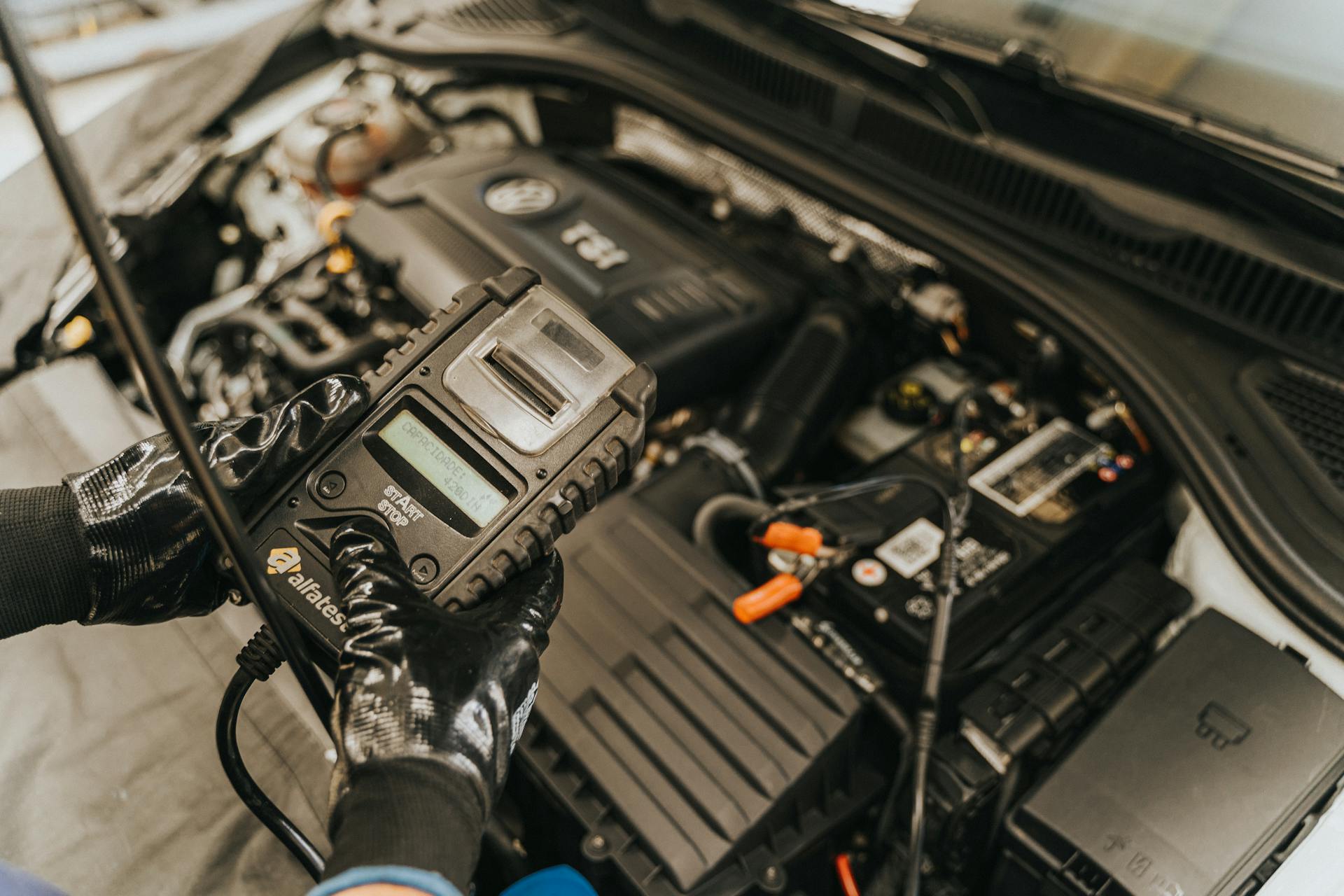
A well-executed remap doesn't touch any of the physical emissions equipment. The catalytic converter, DPF, and lambda sensors remain in place and continue functioning exactly as designed. What a good remap does adjust is fuel delivery and combustion timing, and a competent tuner calibrates these changes specifically to stay within the emissions envelope the car needs to pass its test.
| Fuel type | What the MOT measures | Equipment checked |
|---|---|---|
| Petrol | Carbon monoxide and hydrocarbon levels in the exhaust. | Catalytic converter and lambda sensor system function. |
| Diesel | Smoke opacity — visible particulate under acceleration. | Diesel particulate filter, checked for removal or tampering. |
Signs of a Bad Remap That Could Cause an MOT Failure
The failures that do happen almost always trace back to poor-quality tuning rather than the concept of remapping itself.
Excessive black smoke from a diesel under hard acceleration, which usually points to fuelling pushed too far without matching adjustments elsewhere.
A generic file applied without accounting for the specific vehicle's emissions hardware.
DPF regeneration cycles disrupted by a map that wasn't calibrated with the filter's operation in mind.
Fault codes appearing after the remap that weren't present before, particularly around the lambda sensor or catalytic converter monitoring.
Every one of these is a tuning quality issue, not an inevitable consequence of remapping. A car remapped by a competent tuner, using a file written for the specific engine and emissions setup, should pass its MOT exactly as it did before — assuming it was passing on its own merits beforehand. For a wider look at where things go wrong, see common car tuning problems UK drivers face.
How to Protect Yourself: Before and After the Remap
There's a clear, practical sequence that removes almost all of the risk on both the insurance and MOT side, and it applies whether you're going for Stage 1 or Stage 2.
BEFORE BOOKING
Call your insurer and get written confirmation of how the modification will be treated and what it will cost to declare. Keep that confirmation on file.
Choose a tuner who provides a proper invoice or certificate detailing exactly what was done — your paper trail if an insurer or future buyer ever asks.
AFTER THE REMAP
Declare it to your insurer straight away rather than waiting for renewal — most policies require notification within a set number of days.
Keep the pre- and post-remap diagnostic data if your tuner provides it, demonstrating the car runs within safe, compliant parameters.
If selling later, be upfront with the buyer about the remap — an honest disclosure protects you from any future dispute.
Two Common Scenarios UK Drivers Face
It helps to see how this plays out in practice.
A driver has a Stage 1 remap done on a daily-driven diesel hatchback, declares it to their insurer within a week, and receives a modest premium increase along with updated policy documents. Eighteen months later, a minor rear-end collision that wasn't their fault occurs.
A driver has the same remap done but doesn't get around to declaring it, assuming it's unlikely to come up. A year later, a more serious accident triggers a claims investigation that identifies non-standard ECU software.
The difference between these two outcomes isn't the remap — it's a five-minute phone call that either happened or didn't.
Myths That Come Up Repeatedly
They frequently can, through diagnostic checks during servicing, claims investigations, or manufacturer software logs that record ECU changes. Assuming it's undetectable is a genuine risk, not a safe bet.
It doesn't, provided the tune is competently written and the car's emissions equipment remains intact and functional. Thousands of remapped cars pass their MOT every year without issue.
For a documented Stage 1 remap on a common platform, the increase is often modest, and shopping around — including specialist modified-car insurers — frequently finds competitive terms.
Emissions equipment wears over time on any car, remapped or not. Regular servicing still matters just as much as it would on a standard car.
Frequently Asked Questions
Yes. Any modification that changes performance must be declared, and this applies to Stage 1 remaps just as much as Stage 2, even though Stage 1 is software-only and fully reversible.
In most cases there's some increase, but it's often smaller than drivers expect, particularly for a documented Stage 1 tune. The exact amount depends on your insurer, your driving history, and the specific vehicle.
Yes, non-disclosure of a material modification is grounds to reduce or refuse a claim on its own, even if the remap had nothing to do with the incident that led to the claim.
No. The MOT test checks emissions, safety, and mechanical condition against defined criteria — it doesn't record or flag whether the ECU software has been modified.
Only if the tune has been poorly calibrated. A competent, vehicle-specific remap is designed to keep smoke output within legal limits, and shouldn't cause a failure that a standard, well-maintained car wouldn't also risk.
You can revert the software to the factory file, but you should still disclose the vehicle's modification history to a buyer honestly. Reverting the file doesn't remove the obligation to be transparent about what's been done to the car.
Generally yes, since Stage 2 involves a larger performance increase and supporting hardware changes, which most insurers treat as a more significant modification than a reversible software-only tune.
This depends on your priorities. A remap improves how the car drives, but declaring it accurately to a buyer is essential, and some buyers specifically prefer standard, unmodified vehicles for their own insurance reasons.
Final Verdict
An ECU remap does not automatically wreck your insurance or guarantee an MOT failure, but it does come with real obligations that too many drivers skip past.
Declare it properly, keep documentation from a reputable tuner, and choose an insurer who's actually equipped to price the modification fairly. On the MOT side, the test doesn't care that your car has been remapped — it cares whether the emissions equipment is doing its job, which a properly written tune shouldn't interfere with at all.
The drivers who run into problems are almost never the ones who got a remap. They're the ones who didn't declare it, or who had it done by someone cutting corners on the calibration. Get both of those right, and a remap remains exactly what it's meant to be: a legitimate upgrade, not a liability.
Get it calibrated right, and declared right.
Every remap we write comes with a full diagnostic report and tuning certificate — the exact paperwork your insurer will ask for.